


Quick answer
Attic mold almost always comes from moisture: warm, damp air leaking up from the house, bathroom fans venting into the attic, or blocked ventilation. Cleaning the mold is only half the job. The moisture source must be fixed, or the mold comes back. Industry guides commonly put attic mold remediation at about $1,500 to $8,000, depending on how far it has spread.
Signs you may have attic mold
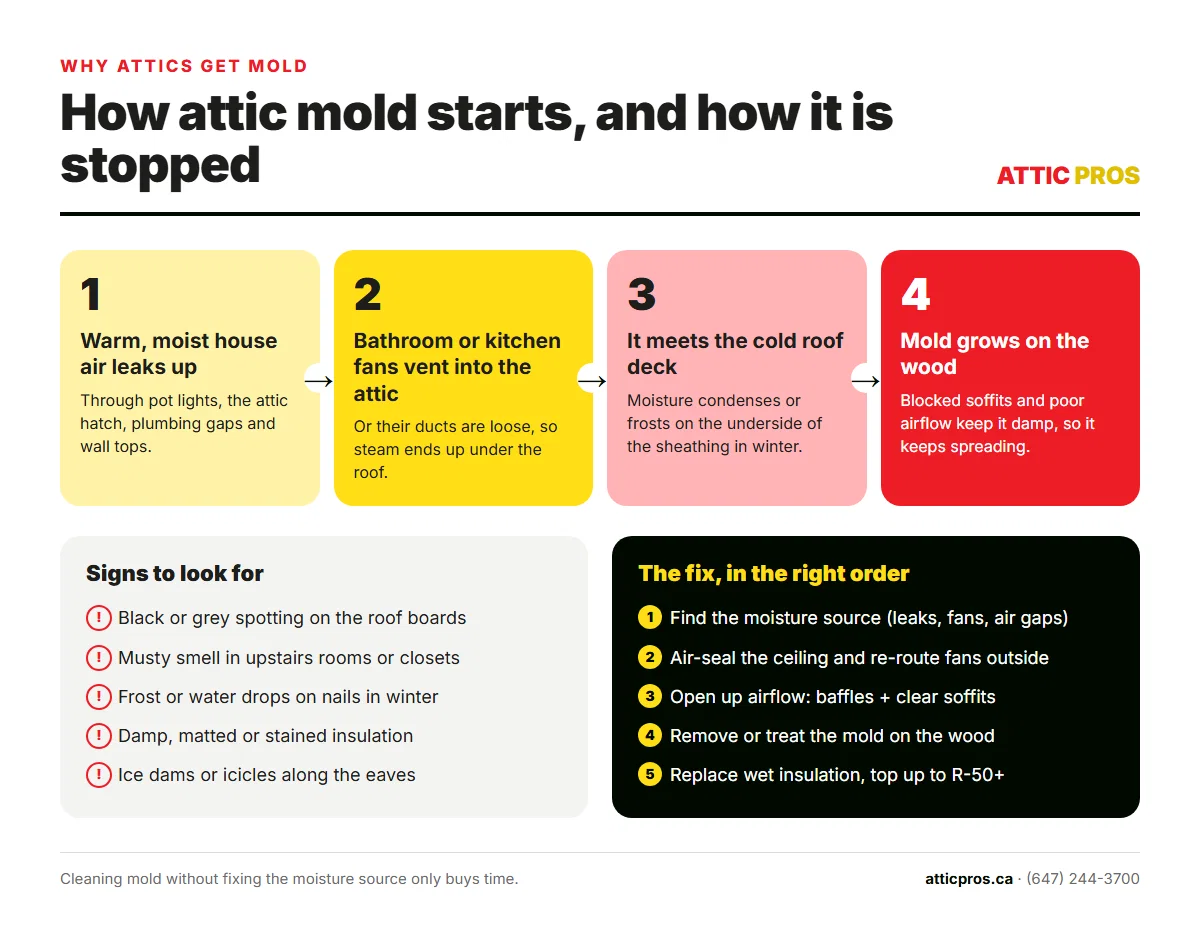
- Black, grey or green spotting on the underside of the roof boards
- A musty smell upstairs, especially in closets
- Frost or water droplets on roofing nails in winter
- Damp, matted or stained insulation
- Ice dams or large icicles along the eaves
- Stains on upstairs ceilings
What causes it
Warm air leaking into the attic
Every gap around pot lights, the attic hatch, plumbing stacks and wall tops lets warm, moist house air rise into the attic. In winter it hits the cold roof deck and condenses, the same way a cold glass sweats.
Fans venting into the attic
Bathroom and kitchen fans should vent outside. When the duct ends in the attic, or comes loose, each shower sends steam straight under your roof.
Poor ventilation
Air should enter at the soffits and leave at the roof or ridge. When insulation blocks the soffits, moist air gets trapped. This is what attic baffles prevent.
Roof leaks
Damaged shingles, flashing or vents let water in directly. These usually show up as a localized stain rather than mold across the whole roof.
How attic mold is fixed, in the right order
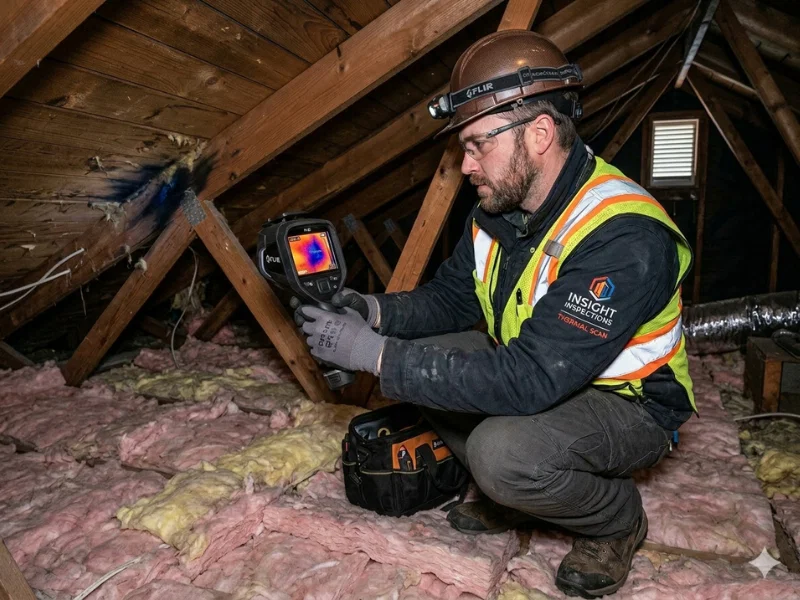
- Find the moisture source with an inspection and thermal imaging.
- Stop it: air-seal the ceiling, re-route fans outside, repair leaks.
- Restore airflow: clear the soffits and install baffles.
- Remove or treat the mold on the wood, and disinfect.
- Replace wet or moldy insulation and top up to R-50 or R-60.
Why order matters
If the mold is cleaned but the bathroom fan still vents into the attic, the mold usually returns within a season or two. Fixing the cause first protects the money you spend on cleanup.
What attic mold removal costs
Prices vary a lot because no two attics are the same. What moves the price:
- How much of the roof deck is affected
- Whether insulation also has to be removed and replaced
- What it takes to fix the moisture source (sealing, fans, ventilation)
- How easy the attic is to reach and work in
Industry guides commonly quote about $1,500 to $8,000 for attic mold remediation, with small, caught-early problems at the low end. The only way to get a real number is an inspection.
Is attic mold dangerous?
Mold in the attic is not usually in the air you breathe every day, but it can affect indoor air when the attic leaks into the house, and it slowly damages the roof deck. People with allergies or asthma may be more sensitive. Do not scrub or disturb large areas of mold yourself.
Frequently asked questions
Can I just paint over attic mold?
No. Paint or spray-on products hide the stain, but if the moisture remains, the problem continues underneath.
Does homeowners insurance cover attic mold?
It depends on your policy and the cause. Sudden events such as a storm leak are more likely to be covered than slow condensation. Check with your insurer.
Will new insulation fix attic mold?
Not on its own. Insulation helps, but air sealing and ventilation are what stop the moisture that feeds mold.
Think you have attic mold?
We find the moisture source with thermal imaging, show you photos, and explain exactly what it takes to fix it.