


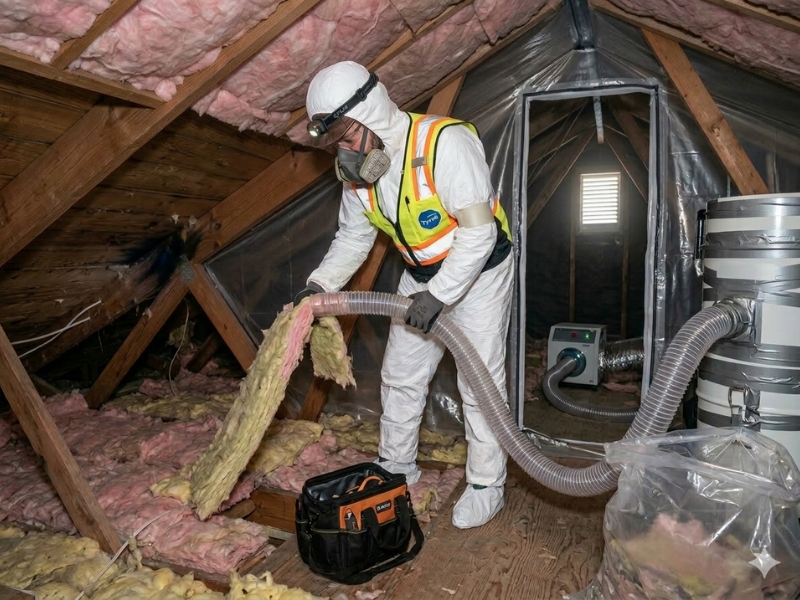
Quick answer
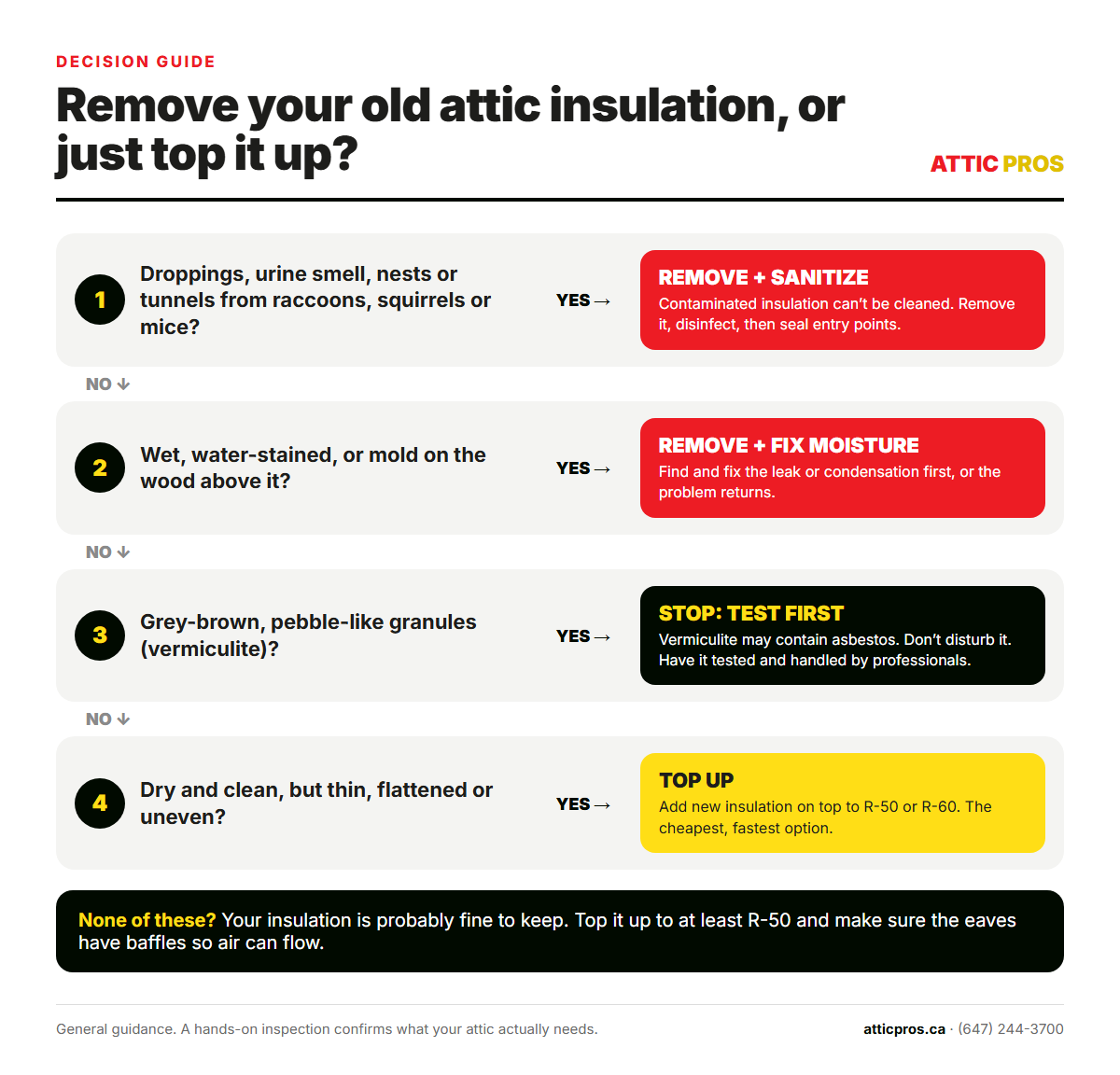
If your old insulation is dry, clean and free of animal waste, you usually do not need to remove it. Just top it up to R-50 or R-60. It must come out if it is wet, moldy, soiled by raccoons, squirrels or mice, or badly damaged. If you see vermiculite, stop and have it tested for asbestos first.
When a top-up is the right call
A top-up means adding new insulation over what is already there. It is the fastest and cheapest option, and it is right for most attics that are simply thin, flattened or uneven but otherwise clean and dry.
When old insulation must come out
Animals have been living in it
Raccoons, squirrels and mice leave droppings, urine and nesting material in insulation. It carries smells, bacteria and parasites such as fleas and mites, and it cannot be cleaned. It has to be vacuumed out, the attic disinfected, and the entry points sealed so the animals do not come back.
- Droppings on top of or inside the insulation
- Tunnels, trails or flattened paths
- A strong ammonia or musty smell
- Scratching or running sounds at night
It is wet or moldy
Wet insulation stops working and keeps the wood around it damp. Common causes are roof leaks, bathroom fans venting into the attic, and warm air leaking up from the house. Fix the moisture source first, then remove and replace the damaged insulation. Read more in attic mold: signs, causes and removal.
It is vermiculite
Vermiculite looks like small grey-brown or gold pebbles. Some of it contains asbestos. Do not disturb it, vacuum it yourself, or let anyone top it up without testing. If it tests positive, removal must be done by asbestos abatement professionals.
It is heavily damaged
Insulation that has been trampled flat, smoke-damaged, or mixed with a lot of debris may not be worth keeping.
How removal works
- Inspection with thermal imaging to find wet spots, gaps and contamination.
- Containment so dust and debris do not get into your living space.
- Vacuum removal with an industrial hose straight to a truck or sealed bags.
- Cleaning and disinfection of the attic floor and framing.
- Repairs: sealing animal entry points, air sealing, adding baffles.
- New insulation to R-50 or R-60.
| Top-up | Remove and replace | |
|---|---|---|
| Typical time | Usually 1 day | Typically 1–2 days |
| Cost | Lower | Higher (removal and cleanup added) |
| Fixes contamination | No | Yes |
| Rebate eligible | Yes, if you reach R-50+ | Yes for the new insulation; removal is not covered |
Should you remove it yourself?
We do not recommend it. Old insulation and animal waste release fine dust and germs, attics are hot and cramped, and it is easy to step through the ceiling. Contaminated insulation also has to be disposed of properly.
Frequently asked questions
Can you put new insulation over old insulation?
Yes, as long as the old insulation is dry, clean and free of animal waste and mold.
How do I know if animals have been in my attic?
Look for droppings, tunnels in the insulation, chewed wires or wood, and a strong smell. Noises at night are a common first sign.
How much does attic insulation removal cost?
Removal typically adds about $1.50–$3.50 per square foot before new insulation, more if cleanup after animals is needed. See our attic insulation cost guide.
Not sure if yours needs to come out?
Our free inspection includes thermal imaging and photos, so you see exactly what is in your attic before you decide.