


Quick answer
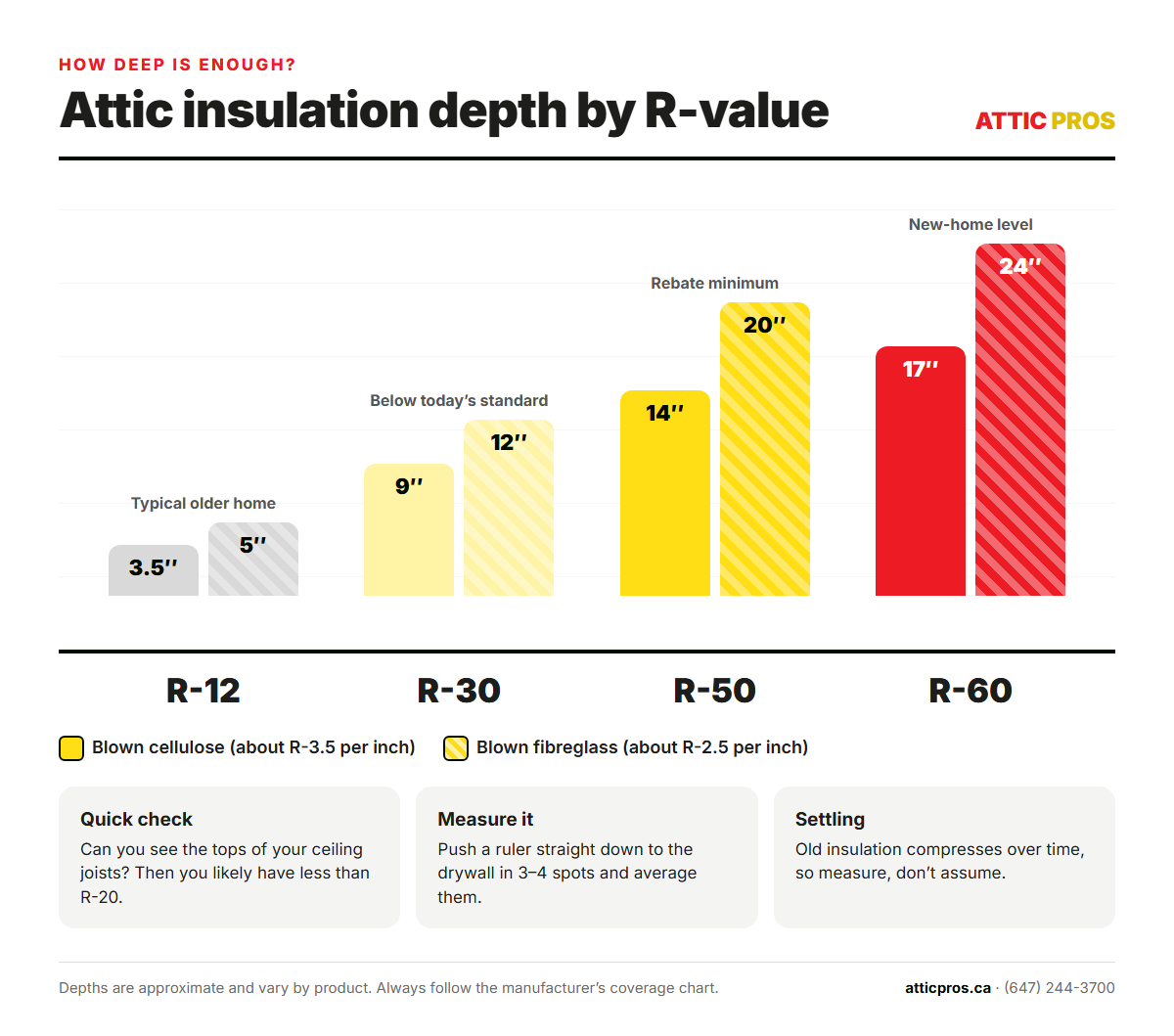
For a Toronto-area attic, aim for R-50 to R-60. R-50 is the minimum for the Ontario rebate. R-60 is the level many new Ontario homes are built to. In depth, that is about 14–17 inches of blown cellulose or 20–24 inches of blown fibreglass.
What R-value means
R-value measures how well insulation stops heat from moving through it. The higher the number, the better it insulates. In an attic, R-value comes mostly from depth: the more inches of insulation, the higher the R-value.
R-50 vs R-60: which should you choose?
| R-50 | R-60 | |
|---|---|---|
| Qualifies for the Ontario rebate | Yes (minimum) | Yes |
| Approx. depth, blown cellulose | 14 in | 17 in |
| Approx. depth, blown fibreglass | 20 in | 24 in |
| Extra material cost | — | A little more |
| Best for | Tight budgets, low attics | Most GTA homes, best long-term comfort |
The jump from R-50 to R-60 costs relatively little because the crew, equipment and prep are already there. For most homes in the GTA we recommend R-60. If your attic is low near the eaves or you are on a tight budget, R-50 is still a big upgrade and still qualifies for the rebate.
How to check what you have now
- Open the attic hatch safely (a sturdy ladder and a flashlight). Do not walk on the drywall between the joists.
- Push a ruler or tape measure straight down through the insulation until it touches the ceiling below.
- Measure in 3 or 4 spots away from the hatch and average them.
- Multiply by about 3.5 for cellulose (grey, shredded paper) or about 2.5 for fibreglass (white, yellow or pink fluff).
Quick check without a ruler
If you can see the tops of the wooden ceiling joists, you almost certainly have less than R-20, and your home would fall in the top rebate tier.
Stop if you see this
Grey-brown, pebble-like granules may be vermiculite, which can contain asbestos. Do not touch or disturb it. Have it tested by a professional first.
What about R-30, R-40 or R-31?
You will see these numbers on batts in hardware stores. R-31 or R-40 batts alone are not enough for an attic here. They are often used for walls or cathedral ceilings. In an open attic, blown-in insulation is usually the better choice because it fills every gap around joists, wires and pipes.
Blown-in vs batts in the attic
| Blown-in (loose fill) | Batts | |
|---|---|---|
| Coverage | Fills gaps and odd shapes | Gaps around wires and joists are common |
| Speed | Fast, done by machine | Slow, cut and fitted by hand |
| Topping up | Easy to add over existing insulation | Harder to lay evenly |
| Best use | Open attic floors | Walls, cathedral ceilings, small areas |
More insulation is not the whole story
Insulation only works well when the attic can breathe and warm house air is not leaking into it. Before adding depth, make sure the eaves have baffles and that bathroom fans vent outside. Otherwise extra insulation can trap moisture and lead to attic mold.
Frequently asked questions
Can you have too much attic insulation?
Not in terms of R-value, but it must not block the soffit vents. Baffles keep that airflow channel open.
Does old insulation lose R-value?
Yes. It settles and compresses over time, and if it gets wet or soiled it works much worse. That is why measuring matters.
Do I need to remove old insulation to reach R-60?
Usually not. If it is dry and clean, new insulation can go on top.
Not sure what R-value you have?
We measure it for free, show you the heat loss with a thermal camera, and tell you which rebate tier you are in.